Vermont Public Specials
2026 - General Election Debate - Governor
Season 2026 Episode 20 | 55m 39sVideo has Closed Captions
Incumbent Gov. Phil Scott faces challenger Amanda Janoo.
Vermont Edition hosted a debate between Vermont's two major party candidates for governor. Incumbent Gov. Phil Scott, a Republican from Berlin, faces challenger Amanda Janoo, a Democrat-Progressive from Burlington. Recorded live in studio Oct. 21.
Problems playing video? | Closed Captioning Feedback
Problems playing video? | Closed Captioning Feedback
Vermont Public Specials is a local public television program presented by Vermont Public
Vermont Public Specials
2026 - General Election Debate - Governor
Season 2026 Episode 20 | 55m 39sVideo has Closed Captions
Vermont Edition hosted a debate between Vermont's two major party candidates for governor. Incumbent Gov. Phil Scott, a Republican from Berlin, faces challenger Amanda Janoo, a Democrat-Progressive from Burlington. Recorded live in studio Oct. 21.
Problems playing video? | Closed Captioning Feedback
Where to Watch Vermont Public Specials
Vermont Public Specials is available to stream on pbs.org and the PBS app.
Providing Support for PBS.org
Learn Moreabout PBS online sponsorshipMore from This Collection
Videos related to the 2026 Election season in Vermont
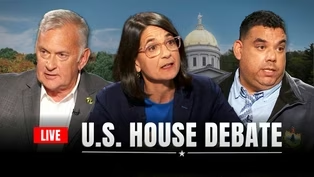
2026 General Election Debate - U.S. House
Video has Closed Captions
General election debate for the U.S. House of Representatives (55m 30s)
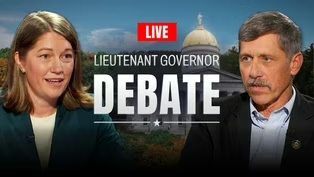
2026 General Election Debate - Lieutenant Governor
Video has Closed Captions
Lt. Gov. John Rodgers, a Republican faces a challenge from former Lt. Gov. Molly Gray, a Democrat. (55m 45s)
Providing Support for PBS.org
Learn Moreabout PBS online sponsorship>> Welcome to the Vermont Public 2026 general election debates.
I'm Mikaela Lefrak, the host of Vermont edition.
Today, the major party candidates for governor.
This show is part of a series of candidate interviews and debates ahead of Election Day on November 3rd.
Now, if you're listening on the radio right now or streaming the audio, you could also watch the live stream on Vermont Public's main TV channel or on YouTube.
You can also find recordings, written transcripts, and analysis of all our election coverage on Vermont Public dot org.
Now here with me in the Vermont Public Studio are Governor Phil Scott, a Republican from Berlin.
He's running for his sixth consecutive term.
He's a former state senator, lieutenant governor, and owner of a construction company.
Welcome.
>> Thank you.
>> We also have Amanda Janu with us, a Democrat progressive from Burlington.
She's an economist working most recently with the Wellbeing Economy Alliance.
Amanda, welcome.
>> Thanks for having me.
>> All right.
Well, here is the format for today's debate.
In the first segment, I'm going to ask questions to both candidates.
They'll each have 60s to answer.
I'll also likely ask some follow up questions.
In the second segment, the candidates will ask each other questions.
They'll have 30s to ask a 30s to answer.
We'll start our third segment with more questions for both candidates.
Then there's a lightning round.
We'll wrap things up with one minute closing statements from each candidate.
And we're going to start with questions for both of you.
Please limit your answers to 60s.
And if one of you makes a direct claim about the other, I'll try to give that candidate some time to respond directly.
The order in which you answer was randomly selected before this program and Phil Scott you will go first.
So we're going to start with your background and experience.
You became governor in 2017.
You've served five terms and are looking for a sixth, 37 states have term limits for governor.
Vermont does not.
And we got this question from John.
John in Middlebury asks, why shouldn't now be the time for somebody new?
And my question is, why do you want a sixth term?
>> Well, it's a great question and something that I ask myself almost every day.
It hasn't been easy over the last ten years.
I never envisioned myself as being governor.
I ran for the state Senate because I was complaining a lot about what they them were doing in the legislature, and they just didn't have that business perspective.
So I stepped up and decided to run myself.
But I thought after ten years that was that was about enough.
And then ran for lieutenant governor through the urging of a good friend of mine, a Democrat, Senator, Dick Mazza, and then for governor.
But we have a lot of unfinished business.
We've we've started a lot of things over the last ten years that we haven't been able to see through because of pandemic and floods and so forth.
So I didn't want to step away until we saw these get to fruition.
Like education, transformation and some of the other ills that we have that we are facing.
So it was more about feeling responsible and feeling as though I needed to run again to see this through.
>> Well, we got a follow up question from an audience member named Andy in Williston.
Let's watch.
>> Hi, I'm Andy in Williston.
As Vermont's governor, you will be managing and leading teams of people.
Please share your related experience and how your leadership style will translate to the role of governor.
Thank you.
>> So we know about your experience.
You've been governor for five terms.
But to add on to Andy's question, I mean, my my question is specifically, I wanted to know how you plan to work with not against the many Democrats who Vermonters keep electing to the state legislature.
>> You know, it's when I was in the Senate, I've alws served in the minority.
I've never served in the majority, ever in any position that I've held.
And and I've always been able to accomplish something, get things done by reaching across the aisle.
I feel, though, that the reaching across the aisle is a two way street.
It should be give and take.
And sometimes when there's more of a majority, they aren't as willing to to, to look back and help you get to where you need to go.
So again, with the, with the balance that we achieved two years ago, I think you can see that we were able to accomplish a lot in that two year period.
And so I'm not changing my style.
I have a lot of friends who are Democrats.
I, I really enjoy many of the legislators and, and I don't think my style is confrontational, but I have I wasn't there to be a rubber stamp.
I was there to represent the people of the state.
And that's why they elected me.
>> Well.
>> Amanda Janoo unlike Governor Phil Scott before this year, there are a lot of Vermonters who did not know who you were, including Susan and Essex.
And Susan wrote to us to say that she's watching this debate so that she can, quote, fill in a large blank about your background and work experience.
Why are you ready for this role?
Having never held elected office before?
>> Yeah.
So thanks for the question, Susan.
And, you know, I've really dedicated my career to working on economic policy, working with governments and communities across the US and around the world.
And so much of my experience was centered on bringing together a variety of state agencies alongside the private sector and civil society, to really outline longer term goals and transformative economic strategies.
And I think that that's the work that we need right now, because the standard economic playbook that we've been using of just, you know, cutting taxes, deregulating industries like gutting and privatizing government services and trying to attract or appease the largest multinationals or big corporations.
It's it's not leading to the trickle down prosperity.
I think that we have been promised over the last decades.
And it's a moment where we really need to use a new economic playbook that builds prosperity from the bottom up.
>> We got a question from Norm in Morrisville, who wrote that in previous elections, many Democrats voted for Governor Scott because they wanted some balance in Montpelier, while Democrats have had a majority.
So I wonder how you would address that concern for balance.
>> Yeah, I mean, I think there's always an important balance that needs to occur between all of the different branches of government, including with the local government as well.
But in this moment, I feel like we've been stuck.
You know, we just have not been moving.
And one way or the other, we really need to be a lot clearer on what are we trying to achieve as Vermonters.
I've been traveling across the state and asking folks in every place I go, like, what is the Vermont you want?
And asking them, what do you think the government's goals are right now?
And people have no idea.
Right.
And so I think that that's maybe part of the starting point where we're stuck in a reactive position because it's not clear where we're heading and where we want to go.
And what I keep hearing over and over is that Vermonters want a Vermont where our young people can afford to stay, where our elders can thrive, where we're protecting and respecting our natural environment.
And really ensuring that every Vermonter has the basic foundations to live a life of dignity.
>> Thank you.
Let's get into some of the nitty gritty here.
This one's going to shock you, but we're going to talk about affordability next.
The buzzword of the year.
Amy in Royalton wrote to us, concerned that longtime Vermonters are considering leaving the state, especially seniors, working families and people on fixed incomes.
Deena in Brattleboro writes that in her 30 plus years as a hairdresser, she's had to rebuild her clientele repeatedly.
As people move away, she says, she's seen many people move across the river to New Hampshire.
Meanwhile, Richard in Miami is considering moving his family to Vermont, but he has concerns of his own.
And let's listen to his question.
>> My family, including our one year old, are considering moving to Vermont in the near future.
What will you tell young families from outside the area who are thinking of relocating here?
Even though the job market, housing and healthcare might be tough, can you assure these families that this can be improved?
Thanks.
>> All right, so we've got Richard in Miami thinking about moving up here with his young family and is worried about what he's heag about in the news.
Amanda Janoo it's your turn to go first.
What would you say to someone like Richard?
>> Well, Richard, I definitely hope that you will come to Vermont.
It's by far the best state, 100%.
I'm not biased at all, but it is true.
You know, we are definitely there is a cost of living crisis that is affecting Vermont right now.
And it's important to be clear that, like, not everything is expensive.
It's really our basic needs, things like health care and housing, food and energy.
And there's a reason for that because, you know, you can charge as much as you want for a basic need, and people are going to have to pay for it until they sort of reach a breaking point.
And I think we're at that breaking point now.
So when we talk about health care, for example, we need more government strategic intervention to actually reduce the fundamental cost of these core necessities and our economy to ensure we're building a housing sector that can ensure permanent affordability, not only for Richard, but also for his kids, so that they can stay for generations to come as well.
And I feel really confident that we're going to be able to build that Vermont.
And so I hope we'll come.
>> So your.
>> Platform hinges on a number of new tax proposals, including raising income taxes on the wealthiest Vermonters.
In June, you told Vermont Public that you favored an 8% surcharge on incomes above $500,000, 2% surcharge on incomes above $250,000.
I wonder if you would promise Vermonters below that threshold that you're not going to raise their income taxes, because some folks might be worried hearing those ones go up and say, am I next?
>> Yeah.
>> No.
Absolutely.
It's really important to just make clear that with all of my proposals, I'm not going to increase taxes for working and middle class Vermonters.
In fact, I'm going to help to reduce the property tax burden for residential Vermonters.
And also fundamentally improve affordability.
So, you know, again, as I've been traveling around the state, I've been asking folks, you know, how many people here actually make $250,000 or more?
It's not normally a ton, but then I'll say, okay, well, would you be willing to contribute the equivalent of the amount you just got back from the big beautiful bill in terms of tax cuts, in order to ensure that everybody, not only in your community but in the state, could have access to a good local doctor and mental health provider.
And thus far, everybody I've spoken to would be happy to contribute that.
>> Yeah, but.
>> Does it worry you at all that that raising income taxes, even on this this higher income bracket would make personal income taxes in Vermont?
I believe, the highest in the country.
Could that dissuade people?
Maybe like Richard, we don't know from moving here.
And is that a problem?
>> Well, it sounded like in Richard's question, one of his concerns was health care.
Right.
And I think a big root driver of not only our rising budget as a state, but also the pressure that's on our schools, on our businesses, on our nonprofits, on our families, is the fact that health care has more than doubled in a decade.
And we need to get to the root of that spending, which is recognizing at this point, we have to move towards a universal health care system.
And a first step of that can be universal primary and preventative care.
The Vermont way of bringing back small town doctors and nurses and mental health providers, and really ensuring that every Vermonter has access to that best quality of care.
And this is really, you know, inspired by a lot of towns who have started to just hire their own community nurses in response to our health care crisis.
I went to my friend, one of my best friend's houses, and her mom had just had surgery on her shoulder, and the nurse came by to help with that recovery.
And I think that's the kind of holistic and localized care that's going to attract more people and actually ensure we're getting the root costs.
>> Well.
Sneak peak.
My next question is about health care.
So we'll talk more about that in a moment.
But Governor Scott, I'd like to turn it over to you and return Richard and Miami's question to you.
>> A lot to unpack there.
>> Yeah.
First of all, I'm very, very glad that we're talking about affordability.
It's something that I've talked about ever since I was first elected, even when I was lieutenant governor.
Grow the economy, make Vermont more affordable, protect the most vulnerable.
Affordability is the issue.
Demographics in our state are working against us.
That's our nemesis.
So we need to do everything we can to reduce the tax burden, right?
Our tax burden is third highest in the nation.
Whyis first New York second, Vermont's third.
California's fourth.
We have the highest property tax.
Property tax rate in the country.
So we have to do something about the root causes.
When I hear Amanda talking about the root causes, that's exactly what we're seeing with education.
We're spending a billion more for education than we were when I first came into office.
That is not sustainable.
That is the crux of the issue.
And if you can't just say you're going to lower property taxes without fixing the system itself, because if the system is is taking all this money in and we're not getting the results for kids, our education, quality of education is down.
The test scores are down for math and reading.
So we have a lot of work to do.
But the first thing before we start raising taxes, let's fix the system.
Then we can figure out how to how to manipulate the tax system so it's fairer for everyone.
But we have the most progressive tax system in the country.
We already do tax people more.
The more they earn.
>> Well, you.
>> Have said that you want to propose a new slate of tax breaks at the beginning of next year's legislative session.
If you're elected again, what are those tax breaks going to include?
>> Everything that we've done in the past, in the last two years have been geared towards the lower end of the scale, and that's what I want to continue to do.
Middle income and lower.
So it's not a tax break for for those with higher incomes.
It's a tax break for those like the earned income tax credit.
We finally got that passed.
It's something I've been asking for for about six years.
And it's the the best anti-poverty tax tool that we have.
So finally got it passed last year, but not enough.
We need to like Social Security.
I don't think Social Security should be taxed.
I think they, you know, especially for those living on a fixed income, that's all they have.
So there's number of areas where we should be reducing the taxes, but fixing the systems.
And the big one is education.
It just is a $2.5 billion to educate 80,000 kids, including pre-K.
That's the highest per student in the in the nation.
We've got to do better.
And fixing the system is part of that.
And it's not easy.
Nobody thinks it's easy.
>> Well, Amanda Janoo has proposed raising income taxes on on the highest earners.
And we do that well.
Well, I wonder what your why you wouldn't want to do that even if you would use that money, that revenue for something very different than universal primary care.
>> First of all, you know, how much is that going to derive?
Right.
I think we have to look at that first, because we only have we only have 1300 people in Vermont that make over $1 million.
We have about 16,000 that make over 250,000.
And that's per per filer.
So that's, you know, husband and wife, husband, husband.
It doesn't matter.
It's it's all the same, same tax filing.
So when you look at that and out of that 1300, over a million, half of them 650, that's a one time event.
They sold their farm, they've sold their business, whatever it is.
So it's one time.
So we don't my point is we don't have that many rich people in Vermont.
And I'm not sure how many we want to lose over the next few years.
One, one person makes $1 billion.
And when that's gone, that's gone.
That one person moves away and it's gone.
So again, tax relief for more lower income.
And, and I, I just the math doesn't seem to work for me.
I don't understand, you know, how much, how much you want to derive from that and, and how much is it going to get down to another level?
>> Like.
>> Let's.
>> See, Amanda respond to that.
How does the math work?
>> Sure.
Yeah.
So the preliminary I've been part of this coalition called Fund Vermont's Future and Public Assets, which is, you know, probably our our major economic think tank within the state did some preliminary estimates of anticipated budget.
And so the proposal that really just looks at, again, recouping the tax cuts for the wealthiest Vermonters, equivalent to the amount that they're getting from the big, beautiful bill, would generate about $260 million.
And the point here is less about, you know, this is the specific pot that we have to use.
But for me, it was really important if I was going to come out and advocate for universal primary and preventative care to make sure that that felt like something we could reasonably do, because this current health care system is not working like the prices are so insanely expensive and they're pushing everything up, including education.
And so being able to start to get to the root and actually begin to provide free health care to folks all across the state is estimated to save potentially $300 million.
>> Well, let's talk more about health care here.
And this next question comes to us again from an audience member, Jack, in Middlebury.
And I just want to say, we received, I think, around 300 questions from listeners ahead of this debate.
So lots of interest.
I just want to thank you, our viewers, for for participating in this way.
Now, Jack has been a primary care pediatrician in Vermont since 1976, and he writes, I've practiced through the failures of HMOs, IPOs, ACOs, and other failed attempts to save our faltering health care system.
Every reform is predicated on an insurance based system of financing.
And Jack wants to know, is it time for Vermont to move away from this system and towards publicly funded health care, or is there still good work to do on our market based system?
>> Phil Scott.
Yeah, I think there's still more work to be done.
Going back to this universal system, single payer.
Let's just go back to that.
Peter Shumlin, when he became governor, he ran on this issue.
He spent five years trying to make it work.
To his credit, after five long years, we went and and he came out and said, we can't afford it.
It's just simply too expensive.
We can't do it on our own.
And I still feel that's the case.
We prove this out.
This is an experiment that that failed.
And he had the good sense to to be square with Vermonters and say it didn't work.
If we're going to do something like this, it has to be done nationally.
It can't be done in Vermont, where we can't afford another experiment like that, because during that whole time when we were advocating or some were advocating for single payer, we weren't taking advantage of of the Affordable Care Act, there was many tools within the Affordable Care Act that are still available to us today, and they never were used.
Then, for instance, if if we use some of the age banding and so forth, look at what New Hampshire has done.
They have used the Affordable Care Act to their advantage.
So when when someone, a young person in Vermont goes and buys insurance, it costs them about $800, right?
$800 a month.
And in in New Hampshire, it's 300 because they've used some of these tools from the Obamacare Affordable Care Act.
And I think that we we have an obligation to go back to that and figure out what we can do in the meantime and then let them debate on the national stage as to whether we go to a Medicare for all, as Senator Sanders has been advocating for.
>> And you brought up age banding or age rating.
And that is when insurance companies take somebody's age into account when setting health care premium costs.
Vermont is one of the states that does not currently allow that.
I do wonder, though, if you see a way to compromise with the Vermonters who really have their hearts set on some sort of publicly funded health care system, this idea will not die.
Yes, Peter Shumlin said, no, it's not going to work, but it has the the idea seems to continue to to stick around to gain momentum.
And I wonder when we're talking about a compromise here, if there's something like a public option that could be on the table.
A couple of states in Washington, Colorado and Nevada have all enacted a public option for.
>> Willing to listen to most anything.
But in the meantime, let's take advantage of the Affordable Care Act tools that are there available to us, that we can, we can we can take advantage of right now.
We don't have to wait, but we can debate the other issues.
I'm not familiar with the Washington Washington public option.
So, you know, it's something to be at least look at.
But, you know, I think the big draw for most people is I'm spending too much for my insurance.
I can't afford it anymore or I can't afford to buy it.
The youth can't afford it.
They're the ones that use it the least.
So that's why the age banding makes sense.
You know, just growing the pool, so to speak, without impacting those on the upper end.
So I, I just think we should do that.
And we can have the debate about the other.
But you know, when you promote free health care, it's hard to say no, but there's nothing free in this world.
>> Amanda.
Janelle, let's turn Jack in Middlebury question over to you now.
>> Absolutely.
Well, I appreciate the question from Jack.
And I do think there's probably a reason that the idea of universal health care won't die.
And I and I think it's just because, you know, we we are at a moment where we can see that our health care system is collapsing.
And it's it's pretty clear at this point, like a profit oriented health care system is just a bad idea.
It's a perverse incentive.
You end up with all of these different industries like insurance and auxiliary industries that are.
Their incentive is to profit off of illness as opposed to if we all pitch in some money.
We have an incentive for everybody to be healthy.
So we don't have to pay as much for medicine or other types of treatments.
And I mean, I agree with Phil Scott in the sense that looking at our current budget, I also can't see how we can immediately move to a universal system.
But what we can start with is a universal primary and preventative care program where we are paying primary care, like professionals directly.
So we're getting rid of the fee for service structure and the profit oriented insurance, which is the root driver of our health care crisis.
>> Now.
>> You've previously estimated that this universal primary care system would cost about $320 million annually, although you said that's really a preliminary number that might not include a lot of what you'd like to cover, like mental health services.
And you've also said that you believe these income tax surcharges on the wealthy could cover the price tag.
What if they can't, though?
What what happens if we set up this system?
Then it requires you to say, find revenue from raising taxes on middle income people.
>> Yeah.
So I think the great thing to begin with is, again, this is not a coming out of nowhere like towns are already doing this because, because we're not seeing the kind of leadership at the state level.
Towns are starting to just figure out hodgepodge ways to ensure that everybody in their communities have access to some health care.
And so, you know, in Tunbridge, for example, their community nurse is just a municipal employee.
And that ensures that everybody has some sort of local health care.
And I love that model.
Right.
If we can just pay, you know, start with pilots, start with some towns where we are paying some primary care providers, a good annual salary and allowing them to get back to the work that they want to do, which is caring for patients, not dealing with paperwork and billing and administration, and get Vermonters used to being able to see a local doctor without having to worry about insurance or co-pays.
We're already starting to build the new system as we figure out how to transition the rest.
>> Well, school costs and school consolidation have come up, so let's dive into that a bit more deeply.
Now we've got a number of questions and comments about schools, including one from Rob who writes the the education portion of property taxes has soared in recent years.
And Rob is not exaggerating.
Property taxes for education increased more than 40% over five years.
Michael in Thetford wants to know simply how will you limit the relentless increase in costs of education?
And Amanda, your your turn to go first here.
>> Great.
Well, first of all, I mean, we know that two of the primary drivers of rising education costs are health care and mental and behavioral support for kids.
And so the important thing is that we actually have to address and look at what are those actual root drivers of costs, because otherwise no amount of consolidation is actually going to decrease the overall spending.
And so I proposed this idea of community schools, which I can get into more.
But in my logic, I guess we deal with property taxes through property tax reform, not through public education cuts, because we can reduce the property tax burden for residential Vermonters through other types of property tax reform.
But the community school model, which we piloted since 2021, is really about integrating a wider range of community nonprofit state services into the schools themselves.
So we're providing the holistic care that kids need, which has been shown to substantially improve outcomes and also help us diversify the budget streams that are going.
>> Okay.
Let me ask you about this, because I was reading your platform about community schools.
And essentially it would integrate more services into schools, including primary care, social workers, adult education, and your platform reads invest upstream rather than paying for crises downstream.
But I think a lot of tax burden Vermonters would say, we're in the crisis, like the downstream crisis is happening now, and you want us to invest more.
>> Yeah.
And so when we talk about integrating a wider range of services, it's like the way in Peacham, right?
Rather than closing their school, they've integrated child care into their school and Winooski.
They've integrated a food bank and a free store in, you know, Newport.
They're having elders come and have lunches with the kids and they're doing skill shares where like the elders share and train them on crafts and the young kids train them how to use their phones, you know, like that kind of thing.
And so the point is, like, our kids are struggling.
Like that's clear when we recognize that a major driver is rising mental and behavioral support needs for kids.
And so we need to make sure that that's actually a major focus.
But by inviting in, whether that's child care, for example, that is often maybe a private sector kind of provision or food banks that's nonprofit or social workers, etc.
that's a state service that actually helps us to meet those needs without having to either increase like that in the education budget, but actually allow it to come from a larger diversity of budget streams.
>> Thank you.
Let's turn Michael and Thetford's question over to you.
Governor Scott, how will you limit the relentless increase in the cost of education?
>> Well, again, let's remember that not everything is funded from property taxes.
One third of the budget, $800 million is from that.
We've spent a knee jerk reaction.
The cost of education goes up.
We just find another tax and we lump that all in.
So sales tax, purchase and use.
ET cetera.
ET cetera.
To the tune of 800 million of that 2.5 billion.
So we have to look at the system itself.
And again, I would disagree that it's all health care related.
$1 billion more in the last ten years.
It the numbers just don't add up.
But when you look at the number of kids that were were losing out of our schools, 30,000 over the last 25, 30 years, that tells you everything you need to know.
I mean, we still have the same number of schools and staff has probably increased same footprint, same costs and so forth, but 30,000 fewer kids in in my area in Washington County, you have u32.
Their senior class was 139 kids this year.
Their their kindergarten enrollment is 85.
That tells you everything you want.
Have to want to know about what's going to happen in ten years, you know, so we have to fix this system.
It's the system itself that is just absorbing, sucking all the life out of us and not getting to the kids.
And, and we don't talk about quality of education enough because it's just spend a lot of money.
One of the most in the nation and our test scores are not showing the results.
>> Well, I do want to stick for a moment with this.
Systems change that you're talking about, because last legislative session, you compromised with lawmakers and gave up on force, had to give up on forced district mergers.
But there is a second part to that education reform package that you've been pushing, which is handing the power over school spending to Montpelier, rather than having it be entirely within local control.
I'm talking here of the foundation formula.
According to Vermont Public's recent poll, it's it's not a popular idea to do this.
So if you are reelected, how are you going to convince Vermonters that the state and not local voters should should be the the force dictating school spending?
>> I think I do think that that's misinterpreted.
I think there'll still be local control, maybe not as much as they have now, but I'm not sure that we have local control as it is the way our funding system works.
6060 was brilliant in that regard.
All the school boards and so forth.
The local communities decide how much they're going to spend.
They spend it, send a bill to Montpelier, and we send them a check.
And if we don't have enough in the pot to to expend all that money, we just fill it up with more increased property taxes.
So that's not working.
So foundation formula is something that I believe about 48 other states use at this point.
So it's common across the country and it's going to be weighted to so that those in the rural communities will get more.
Some some in the more poverty stricken areas of the state will get more.
So it's going to be right sided, so to speak, but they'll still have they'll still be able to weigh The candidates now have an opportunity to ask each other questions, and these questions should be no longer than 30s.
And I'll give you about 60s to respond.
And there could be space for follow ups, but we're already running a bit behind, so we'll see.
Amanda.
Janelle, you're up first.
>> Sure.
So, governor, one of the things as I've been traveling around the state and asking folks about what they love most about where they live, I've heard over and over again, it's like our level of civic participation, like the ways in which Vermonters really show up and want to be engaged.
But they also heard about how people really feel like political decisions are increasingly made for them rather than with them.
And so my question is, what would you change about the way that state government is working so that Vermonters feel like they really have a meaningful role in shaping the solutions that affect their lives?
>> You know, I think part of the solution would be something constitutional.
It's never going to happen.
But here's bear with me.
Yeah, we don't have enough representation in the rural areas of our state.
It's because it's all population driven representatives and so forth.
Chittenden County gets the bulk of all of the representation in Montpelier.
And so it doesn't lead to decisions that help the Northeast Kingdom or down in southern Vermont and, and so forth.
So if I had the magic wand, I would say I would I would change the makeup of the Senate so that you, every, every county got got two, two senators, much like we do on the, on the federal level.
And that way they give be given a fair shake.
And so that's not going to happen.
But I do get out and talk to those in the rural.
And I'm speaking most of the rural areas because they really do get the short end of the stick a lot of the times.
And, and that's why you need a governor that's going to represent them, because sometimes they don't feel represented.
>> Governor Scott, your turn to ask a question.
>> So I'm intrigued here.
Universal care proposal would mandate primary care doctors and nurses, as you described before, and they would become public employees.
And I wonder if you could expand upon that.
Like I'm curious as to, to where they would they would practice or how many of them, what you'd pay them.
I mean, we only have like 600 primary care docs now.
We have a shortage.
And, and a third of them are over 60 years old.
So what do you what do you think?
How do we attract them?
First of all and putting them on the payroll.
>> Yeah.
Great question because it's true.
We definitely don't have enough primary care providers currently.
And I should also say it's not a mandate that every single primary care provider has to be part of this public program.
But it's the idea is that you would offer primary care providers, whether that's a nurse practitioner or, you know, general physician, etc.
the ability to work as a small town will start with the more rural communities that actually are the ones that are experiencing some of the worst sort of public health crises at the moment, with the option of having a small town doctor, nurse and mental health provider.
And what I found so far, honestly, and again, this is anecdotal because, you know, it's just talking to primary care providers as I've been traveling across the state, when I asked them, what do you think about if you could just get, you know, the average annual salary, but you didn't have to deal with insurance or billing, and you could just care for patients.
They're like, sign me up.
Yeah.
But of course, we also need to expd our training for nurses and for primary care physicians in our state.
And I want Vermont to be the leading place that you would come and study.
>> That's time.
Do you have another question for Governor Scott?
>> Sure.
So you probably may have seen that there are attack ads out there right now.
And I know that the Republican Governors Association has been spending about, you know, I think almost half $1 million now.
And they're, you know, they're funded, I think $10 million was just given to them by Elon Musk.
You know, the Koch brothers, a lot of the big sort of pharma and tech companies.
And, you know, I know that you've talked about how you don't appreciate this kind of negative campaigning.
And so I want to see if you would join me and really like condemning this type of outside spending.
>> Yeah.
>> There's just not really much we can do about it.
The campaign finance laws are you can't coordinate with them in any way.
We've run into this across in the past among some of the candidates.
And you just can't do it.
I would rather they just stay out of it.
I've had the DGA attack me.
I've got Virg attacking me.
You've probably seen that attack ad on me that's been playing.
So, you know, it's it's unfortunate, but condemning it isn't going to make it stop it from happening.
They have their own mission.
I, I wouldn't say I'm not sure that the they are attacking you like Virg is attacking me.
But but at the same time, I don't think it's necessary.
>> Governor Scott, do you have a question for Amanda?
>> When we're talking about the economy, you were talking about this and you said your de-growth perspective is quite clear.
We need to stop growing and actually decline in a lot of areas.
And when I hear that, I'm trying to understand what you mean by that.
Because when I hear that, I think you're talking about a recession kind of receding.
And I've been in business, I was in the construction business for 35 years, went through a couple of times during a recession.
They're not fun.
People lose their homes, they lose their jobs.
And it's not a fun time when a when the economy recedes.
And I, I just think I'd like to hear your your thinking on that because I, I don't know if I quite understand.
>> Yeah, no, I appreciate that.
And, and I would say I come from more of a wellbeing economy perspective than necessarily a de-growth one.
But the idea is, you know, we tend to evaluate our not just our economies, but our society success right now on the basis of GDP growth rates and stock market values.
Right.
And the stock market's doing great, but the majority of people can't afford the basics.
So that can't be a good indicator.
And even one of the chief architects of GDP, Simon Kuznets, made clear that that indicator should not be used as a proxy for the well-being or welfare of a society.
And any discussion of growth should make clear growth of what and why.
And I do think we need to grow certain areas of our economy.
We need to be producing more food, more energy.
We need to increase, you know, primary care providers, housing, transportation, etc.
But it's a question of like, how do we intentionally focus on the areas of economy that we want to make sure we're protecting the things that we love and producing the things that we need so that we can all flourish, whilst also respecting the natural environment that sustains us.
All right.
We're now going to return to some questions from our audience.
And for me, please limit your answers to about 60s.
I want to talk a little bit about the dual issues of of carbon emissions and fuel costs.
We got a bunch of questions on this coming from very different perspectives.
And I'm going to pull two here.
Catherine in Duxbury asks what are you going to do to reduce Vermont's carbon footprint?
No issue is more important.
But another listener named Debbie, is much more concerned about energy costs.
Debbie writes that electricity bills are much higher here than the national average.
The average average monthly residential electric bill has increased by nearly 40% since 2019.
So trying to get people to heat their homes with heat pumps right now is a pretty expensive ask.
So my question is, is it possible to do both things at once?
Can Vermont reduce its carbon footprint while also lowering its energy bills, or do our state leaders and our next governor have to prioritize one over the other?
Governor Scott?
>> Yeah, I think we can do both.
I think reducing carbon emissions is important to our planet.
I believe in climate change.
I think it's real.
And the more we can do, the better.
For instance, we've done a lot with solar.
I think we've I don't have the figure in front of me, but it's substantial.
The amount of solar we have.
We do a lot with Hydro-Quebec buying power from them, from hydro electric power.
There's some opportunity there.
Hopefully going to be talking about more another province up there that might be willing to sell us some power.
So we're going we're exploring that.
We have to upgrade our our infrastructure a bit to, to make sure that we can we can bring that down the switching station up in Highgate is important to replace.
So there's a lot we have to do there, but I don't think we should.
I don't think we should close the door on nuclear either.
I've always believed that it's zero carbon emissions and provides that baseload power that we desperately need.
So all that all that together is going to take a while.
>> Where are you going to site this nuclear power?
>> It could be.
It's a small scale nuclear power.
All the New England governors are talking about now, and this is mostly Democrats.
And and whether it be sited in Vermont or in another area is to be determined.
But we're all thinking that this is something that has the potential for all of us.
>> Amanda Janoo.
>> Yeah.
I am incredibly concerned about the cost of energy right now.
I mean, we've seen, I think about a 30% increase in the cost of heating our homes, which I'm really worried about for this winter.
I'm also worried about the larger sort of ripple effects that it's going to have throughout our whole economy.
But every crisis is also an opportunity, right?
And solar is much cheaper at this point than oil and gas.
And we do have an opportunity here.
You know, when I talked to Vermonters about the things they love, it's our communities and our natural beauty, like our mountains, our rivers, our working lands.
And I think we can protect both of those things by really focusing on a community level.
So I grew up in an area where we have fiber as a way in which for us to get the internet.
And that's a beautiful model by which if you can get enough households to sign up to really advance this community solar model quickly as a way for it to not only ensure energy resilience and security, but also allow opportunities for people to feed in and also make money off of those grids.
>> Thoughts on nuclear.
You ready to close the door on it or keep that door open like Governor Scott saying.
>> I'm not in support of nuclear.
I feel like a lot of the push towards nuclear right now, one has been coming alongside the push for data centers.
And so a lot of that is related to the big tech.
The other reason is we still have 30 something barrels of nuclear waste that's on the side of the Connecticut River.
So until we can actually figure out how to deal with nuclear waste, I do not want us to be investing in that type of energy source when we have so much potential with hydro or solar or other types.
I'll also say, you know, growing up, I would always go to town meeting and I remember the year when they were discussing whether or not to close Vermont Yankee and that nuclear facility.
And that was a decision by the people of Vermont not to have nuclear power in our state and a promise that we wouldn't revisit that conversation unless it was through a genuine, deliberative, democratic process.
>> Actually, it wasn't the people of Vermont that determined that it was the Yankee owner determined that they didn't want to go through with that.
I voted against that provision in the legislature because it was supposed to go through the PUC.
There is a process, a public process, and and the legislature decided to circumvent that process, that they introduced.
So it was just an unfair process at the time.
And I will add that Bill McKibben has even said, don't close the door on on nuclear.
>> Do you see the Public Utility Commission?
I want to shift tax entirely towards homelessness and public safety.
Multiple people wrote to us with concerns about this.
Martha in Montpelier noted that there are more than 4800 Vermonters sleeping outside right now, including the elderly and disabled.
Russ regularly sees high numbers of homeless people in need of aid in Burlington and Brattleboro, and Matt, who lives in Jericho, would like you to to talk about Burlington specifically, let's listen to Matt's question.
>> How would you address the homelessness, crime, and drug addiction in Burlington, and what support would your administration offer?
>> Amanda Janoo.
>> Yeah, so I live in Burlington.
Like I have an apartment that I ran across from Battery Park.
So I definitely very much aware of the crisis and the situation last winter.
One day when I was walking outside, there were some police around and I saw that somebody had frozen to death in the middle of the night, and it is it is heartbreaking to witness and see like we've seen like a 300% increase in homelessness.
Like we went from having one of the lowest rates in the country to now having one of the highest.
And I really believe, you know, in an evidence based approach.
And we know from all of the evidence that a Housing first model is the most effective way to alleviate homelessness.
And that's where rather than providing temporary shelter, we really invest in permanent housing for folks and then provide the wraparound services like mental health support, addiction support, employment support, etc.
And that's been shown to be 88% more effective than the standard approach.
>> Sorry to interrupt you, but so would you support using state funds to directly support what's going on in Burlington right now?
>> Absolutely.
I mean, I think that the housing crisis is one of the most essential, you know, crises.
And that needs to focus in us investing in permanently affordable housing.
Right.
And some of that needs to be, you know, like public or nonprofit housing, some of that more housing trusts, co-ops, etc.
But this way we can ensure that that housing is not only affordable now, but for generations to come as well.
And I think it's important to also note, just from a fiscal policy perspective, that a housing first model is much cheaper than actually just responding to the costs of homelessness as well.
>> Thank you.
And Governor Scott.
>> Again, a lot to unpack there.
We actually came to their aid in Burlington.
We we brought everybody together.
The chief Justice, as well as the state's attorney and others, the mayor.
And we determined that we needed to to focus on accountability.
So we created the Accountability Court in Burlington.
We were able to bring down with a special prosecutor and a judge that was dedicated a full time to that.
But we were able to go through the and we had in the courtroom itself, we had the Agency of Human Services there, mental health and those suffering from addiction.
We wanted people to get the help that they needed when they came to court, and determine a path forward for themselves.
So we need the accountability court to come back and focus on that again.
That's something we have to work with.
The the judicial branch about and and we just need to hold people accountable as well.
But I would agree, we need more housing.
And there's no governor who has done more for housing than me.
We've spent hundreds of millions of dollars on housing.
We need regulatory reform.
We're going to do more.
And we we need we need shelter capacity as well for those for the interim.
So I permanent housing is the answer.
And we're not building anywhere near enough.
>> Thank you.
I have so many more questions for you.
But we got to move on to our lightning round because it's fun and I like it.
So we're gonna do it.
Please keep your answers as short as possible.
So around 10s or less.
My first question for you is, is there an issue that the legislature spends too much time on?
Governor Scott.
>> Yeah, I mean, too much time on raising taxes.
>> And did you.
>> Do.
>> School consolidation?
>> Sally of South Burlington asks, should Vermont have term limits for governor and other statewide positions?
>> Sure, yeah.
>> As long as yeah, I, I have always been a proponent of of term limits, but I like to see it on the federal end as well.
>> Hardest job you've ever had, Governor Scott.
>> As a flagger.
When I was 17 years old.
Most difficult job, most monotonous, difficult to take a lot of grief as a flagger.
>> Imagine.
>> You know.
Ooh.
>> Babysitting, maybe.
>> Tough.
>> Have you ever placed a bet through an online sports betting company?
Amanda.
>> No, I am not.
>> Governor.
Okay.
Seasonally relevant, but maybe irrelevant to this campaign, I apologize.
Susan and Montpelier asks, how do you feel about daylight savings?
Should we stop changing our clocks and make it permanent?
Governor Scott.
>> I think we should make it permanent.
I don't know which way we should go, but I think we should make it permanent so we don't change the clocks every single year.
>> Thank you.
Oh, please.
>> I know I hate daylight savings.
I would love and we should definitely make sure that we we keep it to the way that it happens in the spring, I think.
So we keep a little more daylight in the evenings.
>> All right.
Look at us getting to the issues that matter to Vermonters.
How many days should state workers be allowed to work from home?
Amanda.
>> I mean, I'm happy for state workers to return to remote work.
I actually see a lot of benefit of folks being distributed all across Vermont and being embedded in a variety of communities.
I think it's important, you know, based on different administrations, how often they want to make sure that they have folks all together for a meeting in person.
>> Governor Scott, as you may know, I'm three days a week in the office, two days remote work is what we're contemplating.
And we introduced and went to court over.
>> Who is a member of another political party who you respect, governor.
>> Pat Leahy.
Why?
He's just I still stay in touch with him.
He was just a good person.
Reached across the aisle, tried to get things done.
He accomplished that in Washington.
But my second one is Dick Mazza.
Of course, he was someone I was very close to, and he put his arm around me and taught me the ropes and very much appreciated him.
>> Rest in peace.
>> And Amanda.
>> Oh, well, I respect Governor Scott.
>> Why?
>> Oh, well, I think first of all, he's just super nice.
And I appreciate the fact that you've, you know, you haven't followed along with the Republican sort of like Trump, Maga fascist regime and, and really sort of held your own perspective throughout.
>> This time.
Yeah.
>> Well, it's time now for closing statements from each candidate.
The order was determined randomly before the show.
And Phil Scott, you're going to start us off.
>> All right.
Well, we've been through a lot together over the last ten years, and while it hasn't been easy, we've got some tough things done, but there's more work to do.
With two more years as governor and a little support from the legislature, I know we can get Vermont back on track with more jobs, bringing in more families.
We'll have more kids in our schools, more volunteer firefighters and t ball coaches, which is important and a stronger economy.
To get there, we need to build more homes, strengthen schools and hospitals at lower insurance costs, help small businesses, rural communities and family farms.
And we've got real plans to do just that.
The work will be hard and Washington will make it even more difficult.
But you have my my word.
I'm going to roll up my sleeves like I've done my entire life and work every day to make it happen with new ideas and new opportunities for our kids and our families.
And we will grow Vermont's economy, and we will make it more affordable for everyone.
And that's my commitment to you.
And and I just ask for your support.
>> Thank you.
That's Governor Phil Scott and Amanda Janoo.
>> Great.
>> I'm Amanda Janu, and I'm running for governor because I love Vermont and the crises we're facing are overwhelming.
But I'm certain that if we come together in this moment, we're not going to only be able to face them, but actually inspire this nation and show a different way forward.
Because as I've been traveling across the state, I'm continuously shown over and over again how incredibly creative, resourceful, generous, and innovative Vermonters are.
And so in this moment, when, you know, we are facing both authoritarianism and climate change and a cost of living crisis and AI, I want to make sure that we have the kind of leadership that recognizes we can't solve our problems with the same thinking that created them.
But I also want to be very clear that this is going to require all of us.
It's going to require each of us to bring our unique skills and passions to this enterprise, because the choices we make now are going to determine the course of history.
And I know that together we can inspire the world.
>> Thank you.
>> Thank you to both of our candidates tonight.
This does conclude the general election debate for governor on Vermont Public.
We were joined today by Amanda Janu, Democrat progressive candidate, and Governor Phil Scott, the Republican.
The Vermont Public debate series is produced by Daniela Fierro and Holt Albee, with co-production support from Frank Alwine Kyle Ambusk Rick Barrett, Phil Edwards, John Ahrens, Alya Papes, Andrea Lauren Joey Palumbo, Dave Reiss Mike Dunn and Brian Stevenson.
I'm Mikaela Lefrak.
Thank you so much for joining us for this Vermont public debate.
Vermont public debate.
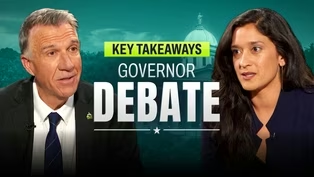 New
Highlights from the 2026 Vermont Governor Debate
Video has Closed Captions
Clip: S2026 Ep20 | 6m 52s | Highlights from live debate between Gov. Phil Scott and challenger Amanda Janoo (6m 52s)
Providing Support for PBS.org
Learn Moreabout PBS online sponsorship New Season
- Drama

Hugh Bonneville stars in a crime drama inspired by one of the largest robberies in British history.
 New Episode
- News and Public Affairs

Top journalists deliver compelling original analysis of the hour's headlines.
 New Season
 New Episode


 New Episode

Support for PBS provided by:
Vermont Public Specials is a local public television program presented by Vermont Public